
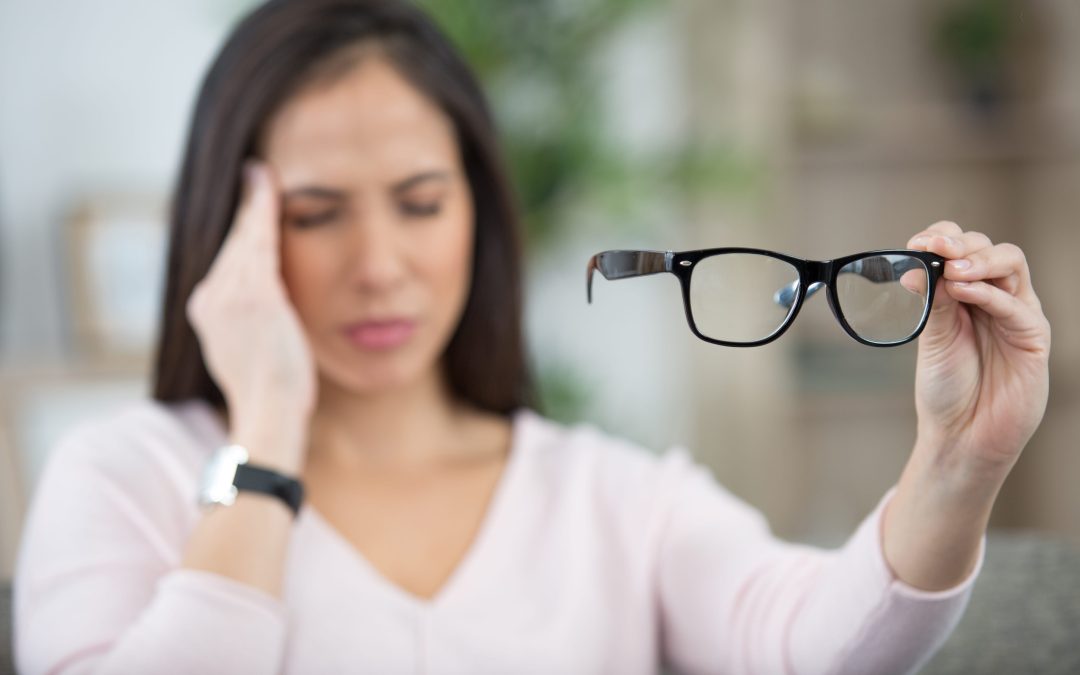
Putting on a new pair of frames should feel like relief. Instead, a dull ache behind your eyes can turn a vision upgrade into a daily annoyance that sends you straight back to your old pair. This guide covers why your eyes react to new lenses and how long adjustment normally takes. It also explains when eyeglasses Greeley CO, should have their fit checked.
Why Your Eyes and Brain React to New Lenses
New glasses cause headaches because your eyes and brain need time to adapt to changed light angles. Even an accurate prescription shifts how objects land on your retina. Your brain spent months compensating for blurry vision, so crisp clarity takes extra mental effort at first.
Your Brain Is Relearning Depth and Distance
Your brain acts like a translator, turning incoming light into a steady picture. When a new prescription bends light differently, your brain initially applies your old spatial map to the sharper image. Flat floors can look slightly curved because of that mismatch until your visual system recalibrates.
Your Eye Muscles Are Working Overtime
Tiny muscles inside each eye flex constantly to focus on near and far objects. A new prescription shifts their baseline tension right away. That extra flexing causes eye strain, which often shows up as a dull ache across your forehead.
Your Eyes And Inner Ear Are Out of Sync
Balance depends on steady communication between your inner ear and your eyes. Because new lenses alter your peripheral view, your eyes send movement signals that clash with your sense of balance. That clash explains why some people feel mild dizziness on stairs or when they turn their heads fast.
How Long Normal Adjustment Takes by Lens Type
Most people adjust within two to fourteen days. The exact timeline depends on your prescription strength and lens style. Soreness that fades a little each morning is a good sign. Knowing the typical window for your lenses helps you stay calm during that first week.
| Lens type | Adjustment window | What feels normal |
| Single-vision lenses | 2 to 3 days | Mild forehead ache and slight pulling during screen work |
| Astigmatism lenses | 7 to 14 days | Slanted doorways and bowed floors |
| Progressive lenses | 1 to 3 weeks | Peripheral swim sensation and mild dizziness when turning fast |
| Prism lenses | 1 to 3 weeks | Subtle depth changes and mild eye tiredness |
First-time astigmatism corrections and progressive designs take the longest because light bends differently across separate lens zones. According to the Cleveland Clinic’s guide on adjusting to new glasses, temporary blurred vision and a fishbowl effect are common early on. Put your new pair on in the morning and leave them on until bedtime. Steady input helps your eyes lock in the new focus faster.
Four Physical and Optical Issues Behind Persistent Pain
Sharp headaches that start right away usually point to a fit problem or a measurement error. Even a tiny misalignment forces your eye muscles to strain just to merge two images into one.
Off-center pupillary distance. The optical center of each lens has to sit directly in front of your pupil. When those centers sit too wide or too narrow, the lenses pull on your eye muscles and cause sharp pain between your eyebrows.
Tight arms or heavy nose pads. Frames that pinch behind your ears or dig into your nose bridge press on surface nerves. That physical pressure mimics eye strain, and a localized tension headache often builds up until you take the glasses off.
Curved wrap-around frames. Switching from flat frames to larger curved styles changes the front angle of the lenses. Steeper curves bend peripheral light more sharply, so vertical walls can look bowed until your brain adapts.
High-index lens edge distortion. Thinner high-index materials keep strong prescriptions light, though faint color fringes near the outer edges bother some wearers. Your brain works hard to filter out that distortion, and sensitive eyes get tired as a result.
Practical Tips to Ease Discomfort During Your First Week
Simple wearing habits and regular screen breaks can shorten your adjustment window. Small changes in how you move your head also take the load off your focusing muscles.
Put your new glasses on first thing in the morning, when your eyes are rested. Do not swap back to your old frames during the day. Switching prescriptions forces your brain to restart the adjustment process. Before you type “eye exam near me” into your phone out of frustration, give the new pair a few uninterrupted mornings.
Progressive lenses have a clear central corridor for distance and reading vision, with softer zones at the sides. If you glance sideways with only your eyes, your gaze hits those blurry edges and can trigger mild motion sickness. Turn your whole head so your nose points at what you want to see. On stairs, tuck your chin slightly toward your chest and look at each step through the top distance portion of the lens. The bottom reading zone magnifies the floor and makes steps look closer than they actually are.
Staring at a monitor locks your focusing muscles into a tight near-focus hold and slows your blink rate. According to the American Academy of Ophthalmology’s computer eye strain guidelines, looking at something at least twenty feet away for twenty seconds every twenty minutes lets those muscles relax. Reading about glasses vs. contacts for dry eyes and eye fatigue also shows how dedicated computer glasses paired with contact lenses protect your tear film during long workdays.
Quick Home Fit Check Before You Visit the Clinic
You can spot many frame problems in front of a bathroom mirror in under two minutes. Wear your frames for thirty minutes first. Then take them off and check the bridge of your nose for deep red marks. Nose pads that sit too narrow or carry too much weight will cause localized tension headaches every time.
Next, run a finger along the temple tips behind your ears to check for pinching. Tight arms clamp the sides of your head and send soreness toward your temples.
Look straight into the mirror and see whether one lens sits higher or closer to your cheek than the other. A crooked frame tilts your optical centers, which makes one eye work harder than its partner. A quick check like this tells you whether the frames need a gentle tweak or the prescription needs to be verified.
Clear Signs to Get Your Glasses Checked
Schedule a re-check if your headaches worsen over time or last past two full weeks of steady wear. Headaches that start within minutes of putting on the frames also warrant a visit. Patience helps with normal adjustment, yet pushing through a real fit or prescription error only keeps you uncomfortable longer. Visiting an eye doctor Greeley patients trust ensures your prescription and frame geometry both match your face.
- Pain lasts past fourteen days: Daily wear should steadily reduce mild soreness. A lingering headache after two weeks signals a prescription discrepancy.
- Symptoms start instantly: Sharp pain behind your eyes within five minutes points to an off-center optical measurement.
- Vision looks uneven: Blurriness that feels noticeably worse in one eye usually stems from a lens manufacturing error.
- Frames leave sore pressure marks: Red spots behind your ears or on your nose call for a quick adjustment by a skilled optician.
- You see double: Overlapping images or trouble keeping text single means your eyes are fighting an uncorrected alignment issue.
At Vision Clinic at Foxhill, you never need an appointment to stop by our Optical Department for a frame check, and routine adjustments are free unless replacement parts are needed. Tight temples can be warmed and reshaped, and nose pads can be balanced in minutes. Our licensed opticians also verify your lens centers on the spot. If the lenses match your exact order, an eye doctor Greeley specialist on our team, Dr. Tarry Harvey or Dr. Nancy Smith, can re-evaluate your visual alignment and fine-tune your prescription. You can also explore custom-fitted eyeglasses Greeley CO that our opticians tailor on-site for everyday comfort.
Find Lasting Comfort for Your Eyes
Mild headaches during your first few days in new glasses usually reflect normal brain adaptation. Pain that lasts past two weeks or starts right away points to a fit or prescription issue. If your lenses still feel off, or if you catch yourself searching for an eye exam near me, stop by Vision Clinic at Foxhill or call our office for a friendly checkup. Schedule a visit with an eye doctor the Greeley team residents count on, and try custom eyeglasses in Greeley, CO, for clear, comfortable sight.