
We often treat our eyes with the casual negligence of a camera lens. We assume that if the images on our mental screen appear sharp, the hardware behind them must be functioning perfectly. This logic holds up for a mechanical shutter. It fails, however, to account for the biological reality of the human eye.
The retina is not a static film. It is a dense, living field of neural tissue. In fact, it functions as a direct extension of your brain. It is the only place in the body where a physician can view your blood vessels and nerves in their natural state without needing a scalpel.
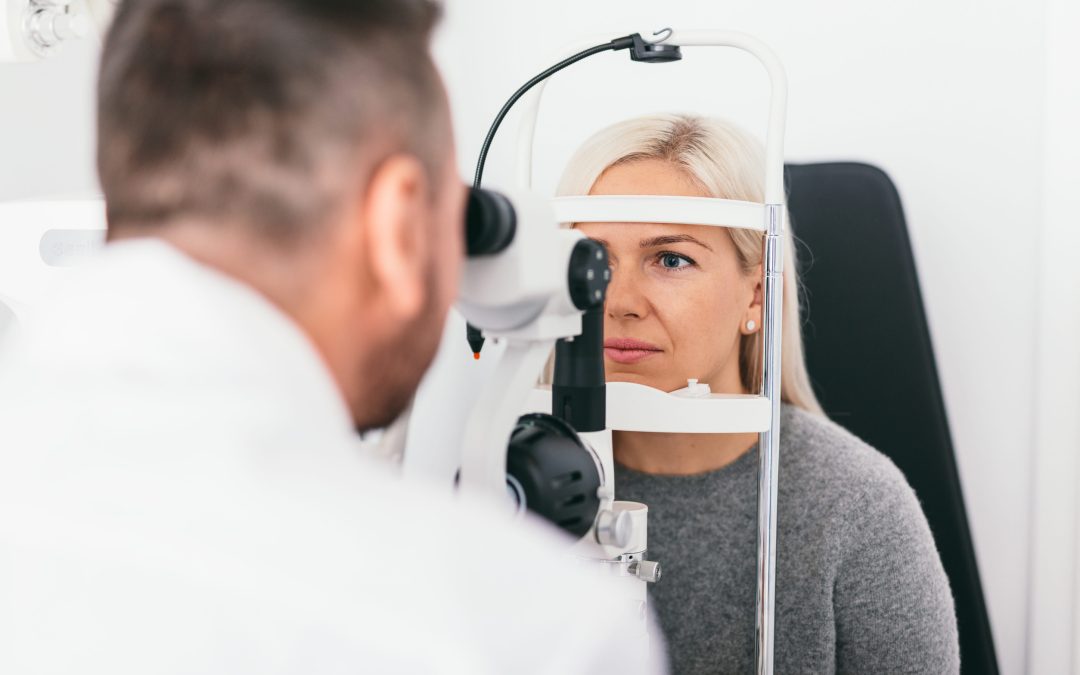
When you walk into a clinic for an “eye exam near me,” you are not just getting a prescription update. You are undergoing a non-invasive physical of your brain and blood vessels. If you wait for your vision to blur or your comfort to fade before seeking care, you ignore the early warning signals that the eye provides about the state of your entire body.
The assumption that “no symptoms means no problems” is a dangerous gamble. This is especially true for conditions that operate silently. Hypertension, diabetes, and even early-stage neurological degeneration often leave markers in the retina years before they impact your ability to read a sign on the highway.
The Vascular Mirror
The anatomy of the human eye is unique because it offers a direct, unobstructed view of the microvasculature. Nowhere else in the body can a physician witness blood vessels in their living state without a surgical incision.
Recent research, such as the study on retinal vessel caliber in patients with stable angina, has clarified the relationship between these ocular structures and systemic health. When an eye doctor in Greeley conducts a comprehensive exam, they look at more than just the health of your iris or lens. They observe the condition of the vessels that supply blood to the retina. Because the eye shares a circulatory loop with your heart and brain, these vessels serve as a proxy for the strain on your overall cardiovascular system.
As noted in a recent study on retinal imaging, the eye serves as a diagnostic tool for systemic health:
“The unique vascularized anatomy of the human eye, encased in the retina, provides an opportunity to act as a window for human health. The retinal structure assists in assessing the early detection, monitoring of disease progression, and intervention for both ocular and non-ocular diseases.”
If the vessels in your retina show signs of narrowing or changes in diameter, it often signals systemic cardiovascular stress. Treating your annual checkup as a medical necessity, rather than an optical formality, allows for early intervention that can dictate long-term health outcomes.
Detecting the Silent Progression
Glaucoma is often described as the “silent thief of sight.” There is a reason for this. It rarely announces its arrival with pain or sudden blackouts. Instead, it slowly constricts your field of vision. It starts at the periphery, where you are least likely to notice a deficit.
You might recognize that you are bumping into doorframes. You might notice you are missing objects on your side. By the time you notice these things, the damage to the optic nerve is often permanent.
This is the logic of preventative care. An optometrist Greeley CO, can turn to technology to measure intraocular pressure and map the optic nerve. They identify subtle changes long before they manifest as functional vision loss. When you skip these appointments, you essentially fly blind. You hope that your body will signal a problem before it becomes irreversible. Modern clinical standards move beyond simple acuity tests. They use advanced techniques that catch the earliest signatures of disease.
Beyond the Refraction
There is a common misunderstanding that an eye exam is defined by the “which is better, one or two” test. While determining your prescription is part of the process, it occupies a small fraction of the actual evaluation.
The primary task of your provider is to evaluate the integrity of the structures inside the eye. This includes the vitreous, the macula, and the optic nerve head. Artificial intelligence now assists in analyzing retinal images. Consequently, the accuracy of detection for conditions like diabetic retinopathy has risen sharply. Early detection of retinal changes in diabetic patients is the difference between manageable health and permanent vision loss.
The American Academy of Ophthalmology’s guidelines for a comprehensive adult medical eye evaluation state:
“The eye examination is an essential part of a comprehensive medical evaluation. It provides the only opportunity for direct, noninvasive visualization of the microcirculation and the optic nerve, and it allows for the diagnosis of systemic diseases.”
This is why, at a practice like the Vision Clinic at Foxhill, the focus remains on total ocular health. If you only visit when you need new frames, you miss the opportunity to catch issues like dry eye syndrome. This condition can be symptomatic of deeper bodily imbalances. It also allows your doctor to catch macular degeneration in its nascent stages.
The Cognitive Connection
The relationship between the eye and the brain is direct. Research into retinal biomarkers—such as findings observed through optical coherence tomography—suggests that the retina may offer early signs of neurodegenerative conditions. Alzheimer’s disease is one such condition under intense scrutiny.
Studies have linked the thinning of the retinal nerve fiber layer to cognitive decline. This research is still developing. However, it highlights the importance of keeping a longitudinal history of your eye health. Having a baseline record of your ocular structure allows an eye doctor Greeley patients trust to spot subtle shifts over time that might otherwise be missed.
You would not delay care for a heart condition until a heart attack occurs. Similarly, you should not wait to investigate your ocular health until your sight begins to fail. The retina is a living, changing tissue. It requires regular observation to establish what is “normal” for you.
Your Health, Your Responsibility
The “if it isn’t broken, don’t fix it” approach is dangerous in medicine. Internal health is rarely as obvious as a broken bone. The eyes often hide their struggles until they reach a breaking point.
When you seek an “eye exam near me,” you take an active step in your own physical maintenance. It is a moment to step back from the demands of your daily routine. You ensure that the biological equipment you rely on to interact with the world remains in working order.
Whether you are a regular visitor to an optometrist in Greeley CO, or someone who has let a few years slip by, the best time to establish a baseline for your ocular health is now. The equipment is ready. The science is clear. The window into your systemic health is waiting to be inspected.
Are you prepared to see what your eyes are trying to tell you, or will you wait until the message becomes a crisis?